
Training Package

Autism and the Primary School Programme Victoria Park Primary School (parent (Book all 4 weeks booking by package)

Monday 7 Nov 2022 – Monday 28 Nov 2022

Location

Victoria Park Primary School, 182 Connsbrook Avenue , Belfast , Antrim , BT4 1JY

Get directions (opens in new window)

Programme sessions

–

In-Person

Autism, Learning Style, and the Impact of Visual Teaching Methods

Edel Quinn

Edel Quinn

Victoria Park Primary School, Belfast

Booking closes

View details Hide details

Autism, Learning Style, and the Impact of Visual Teaching Methods
Visual strategies are widely used when working and living with autistic children and young people, as they:
• Complement the learning style of many autistic children, young people and adults
• Can be introduced alongside other intervention strategies. 
• Are adaptable, portable and can be used in most situations. 
The use of visual strategies can have a notable impact on how an autistic child experiences family, community, and school life, as they help to clarify expectations and make abstract concepts more concrete. Visual strategies support children as they develop effective communication, appropriate social interaction, and positive behaviour skills, as well as accessing the curriculum.
This session will cover why visual teaching methods work. Professionals and parents will become more familiar with how their input will reflect a sound evidence base and be more able to adapt the school or home environment and individualised tasks to meet the needs of the child, in order, to enhance learning, play or leisure skills and social interactions. 
Expected Outcomes
• Understand the importance of visual teaching methods.
• Understand how visuals will improve the learning of the child and his or her experiences 
• Develop some visual strategies that can be used to support the child
• Why visuals work for autistic children.
• Using visuals in school or the family home
• How to develop visuals and implement visual strategies.

Notes

View course notes (PDF) (opens in new window)

About the trainer

Edel Quinn

Edel Quinn

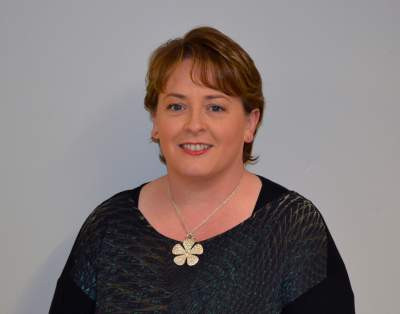
Edel is a Trainer/Advisor and the MCA course coordinator for the Post Graduate Autism Studies programme in partnership with Mary Immaculate College, Limerick. She has supported the development of the post graduate programme since 2016. Edel previously worked in the National Health Service Northern Ireland (NHS), developing and delivering home programmes for autistic children and young people, and their families. Edel holds a Psychology degree, a MSc in Autism from Queen’s University, Belfast and a MSc in Mental Health for Children and Young People from University of Edinburgh. Edel has a Post Graduate Diploma in Cognitive Behaviour Therapy and registered with the British Association for Counselling and Psychotherapy. In her role with Middletown Centre for Autism Edel develops and delivers both parental and educational professional training programmes.
–

In-Person

Autism and Communication

Majella Nugent

Majella Nugent

Victoria Park Primary School, Belfast

Booking closes

View details Hide details

Autism and Communication.
Communication is a multi-faceted, complex interaction involving mastery in many of the following,
• Understanding non-verbal cues  
• Command of tone of voice  
• Command of facial expressions  
• Understanding different purposes of conversation  
• Sense of humour  
• Familiarity with social courtesies  
• Making the abstract concrete  
• Visual structure and predictable routines  
• Activities that provide support for language abilities  
• Interactions that provide focus on peers and self-awareness  
• Generalisations. 
Therefore, communication can be challenging for many autistic children.
Many wish to be socially interactive, make friends and form relationships, be included within the classroom and wider community, but find it difficult because of the many social conventions needed to achieve effective communication.
Autistic children, experiencing such difficulties, may find it hard to understand the messages being given, such as the meaning others put into their voice, the expressions on their faces, and gestures such as waving, pointing or shrugging
Participants will have an increased understanding of
•    How communication is defined. 
•    Communication difficulties 
•    Best practices in supporting the child in the classroom, family home and wider community.
•    The importance of visual information as it remains available long enough to enable the child to focus on it or return to it as needed to establish memory for the message it is communicating.
•    Visual tools provide a non-transient foundation for more effective communication. 
•    How to use the strengths of the autistic child to help him or her communicate effectively.

Notes

View course notes (PDF) (opens in new window)

About the trainer

Majella Nugent

Majella Nugent

Majella Nugent is an Autism Trainer/Advisor in Middletown Centre for Autism. Majella has experience teaching and supporting autistic children and young people in schools. Majella’s experiences include Pre-school, Mainstream Primary and Post-Primary and Special Schools across Ireland. Majella also has experience teaching autistic students in Further Education. She has lectured and assessed modules on the Early Childhood Foundation Degree and the Level Three Autism qualification, as professional development for parents and professionals.

Majella’s training specialism is Relationship and Sexuality Education, Transitions and Special Education Needs. Majella has contributed to the development of the curriculum as a Professional Associate with CCEA for learners with MLD and co-ordinated specialist trainings including Transition to Higher Education (Ulster University and Trinity College Dublin), 16+ Education and Employment, and Sibling trainings. Majella is an Associate Lecturer on the Post Graduate Certificate with Mary Immaculate College Limerick.

–

In-Person

Autism and Anxiety Management

Frances O'Neill

Frances O'Neill

Victoria Park Primary School, Belfast

Booking closes

View details Hide details

Autism and Communication.
Communication is a multi-faceted, complex interaction involving mastery in many of the following,
• Understanding non-verbal cues  
• Command of tone of voice  
• Command of facial expressions  
• Understanding different purposes of conversation  
• Sense of humour  
• Familiarity with social courtesies  
• Making the abstract concrete  
• Visual structure and predictable routines  
• Activities that provide support for language abilities  
• Interactions that provide focus on peers and self-awareness  
• Generalisations. 
Therefore, communication can be challenging for many autistic children.
Many wish to be socially interactive, make friends and form relationships, be included within the classroom and wider community, but find it difficult because of the many social conventions needed to achieve effective communication.
Autistic children, experiencing such difficulties, may find it hard to understand the messages being given, such as the meaning others put into their voice, the expressions on their faces, and gestures such as waving, pointing or shrugging
Participants will have an increased understanding of
•    How communication is defined. 
•    Communication difficulties 
•    Best practices in supporting the child in the classroom, family home and wider community.
•    The importance of visual information as it remains available long enough to enable the child to focus on it or return to it as needed to establish memory for the message it is communicating.
•    Visual tools provide a non-transient foundation for more effective communication. 
•    How to use the strengths of the autistic child to help him or her communicate effectively.

Notes

View course notes (PDF) (opens in new window)

About the trainer

Frances O'Neill

Frances O'Neill

Frances O’Neill is an Autism Trainer/Advisor in Middletown Centre for Autism. Frances has worked in Special, Post Primary and Further Education settings. She holds Post Graduate Certificates and Diplomas in various aspects and areas pertaining to Education and an MSc in Autism.

–

In-Person

Autism and Sensory Processing

Clare Canale

Clare Canale

Victoria Park Primary School, Belfast

Booking closes

View details Hide details

Autism and Sensory Processing
Sensory processing refers to the ability of a child to register, interpret and respond to sensory information. This is a complex process involving all the sensory systems, auditory, gustatory, visual, olfactory, tactile, proprioceptive, vestibular, and interoception. When sensory processing is working well, a child can engage in daily functional activities and social interaction. Sensory processing differences are prevalent in autistic children and can affect every aspect of life and development.
This session examines the sensory processing differences experienced by many autistic children and will demonstrate how such differences impact on learning, play, social interactions, and behaviour for the primary school aged child.
Participants will: 
•    Develop an understanding of the sensory processing differences.
•    Understand how sensory processing differences can affect the child’s experience at school.
•    Understand how sensory processing differences can influence the child’s participation in daily activities.
•    Develop an understanding of general intervention strategies to accommodate sensory processing differences in daily activities at school and beyond.
•    How sensory processing differences can present in an autistic child.
•    Intervention strategies to address sensory processing differences in school or the family home.

Notes

View course notes (PDF) (opens in new window)

About the trainer

Clare Canale

Clare Canale

Clare Canale is an Autism Trainer/Advisor in Middletown Centre for Autism. Clare is an occupational therapist for children and young people, and has worked in nursery, special, and post primary schools, as well as charity and private sectors. She has a Master’s in Clinical Research. Clare previously developed a range of training courses, which were accredited and delivered to parents, professionals, undergraduates and post-graduates, nationally and internationally. Clare has extensive experience in assessing sensory motor difficulties and developing intervention programmes for autistic students. Clare currently has her own private practice, and runs popular therapeutic activity groups for autistic children.